
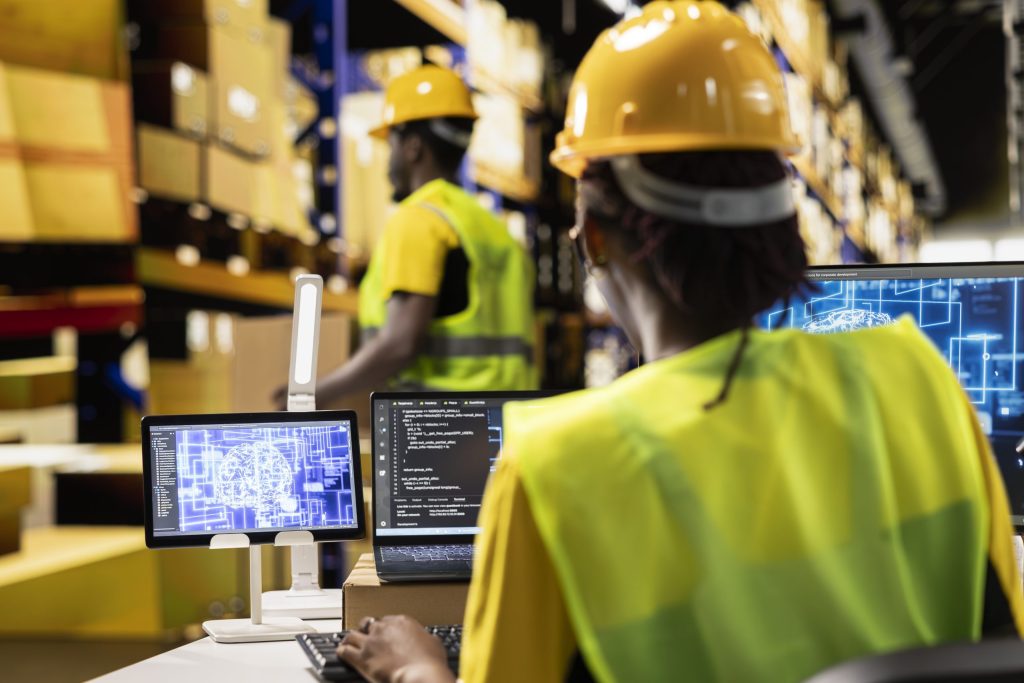
The global logistics sector is undergoing a major transformation driven by technological advancements, evolving customer expectations, and geopolitical events. According to IMARC projections, the logistics sector was valued at USD 5.65 Trillion in 2024 and is forecast to reach USD 8.07 trillion by 2033, with a CAGR of 4.02 per cent over the forecast period. This rapid growth is driven largely by technology-driven innovations that are reshaping how supply chains function in the modern era. As they form the backbone of the global economy, improvements in logistics and supply chains can streamline processes across other industries and yield better economic outcomes at scale.
Cloud-based technology also allows organisations to centralise enormous amounts of data and access real-time information in warehouses, transportation systems, and distribution centres. This has greatly enhanced scalability, collaboration, and decision-making capabilities for organisations in a supply chain, as well as boosting trust among different entities in the chain. However, the IoT technology allows devices such as sensors, vehicles, and equipment to interconnect or sync up over the internet; hence, it has transformed many aspects of the industry to make it even more dynamic and responsive. For example, IoT sensors can be used to monitor environmental factors such as temperature and humidity when transporting perishable items to ensure they are transported safely and reduce any losses.
The availability of large amounts of real-time data has made data analysis and interpretation critical for organisational success. In this particular scenario, there is a wide scope of AI to contribute significantly towards optimising the business, providing important insights, and creating a more efficient supply chain. For instance, AI-based tools can be utilised to determine the best route to deliver products, considering current road conditions and time slots. This, apart from giving customers a sense of satisfaction, will also contribute significantly to reducing carbon footprint, fulfilling sustainability.
Digital twins, in the logistics sector, provide a virtual copy of the actual supply chain network. This allows companies to create replicas of various components, including warehouses, vehicles, production units, etc., to assist companies in conducting system testing and evaluating performance without affecting actual business operations. The digital twin is connected to real-time information from various sensors and devices, enabling accurate simulation of the system, which is important in resource allocation. The digital twin is important, especially when it comes to supply chain disruption management, where scenarios are simulated, enabling companies to be prepared to respond to any situation, even when there is unpredictability.
The adoption of robotics is growing rapidly in the logistics industry, transforming a sector known for extensive manual labour into one that is automated and digital-first. According to Fortune Business Insights, the robotics market within the logistics sector is projected to grow from USD 7.11Billion in 2022 to USD 21.01Billion by 2029, with a CAGR of 16.7 per cent during the forecast period. The most common use case for robotics is in repetitive and high-volume tasks like sorting, picking, and packing, which are performed with unmatched speed and precision. In addition, the adoption of technology also helps organisations to minimise accidents and protect the lives of employees from injuries, as high-risk tasks are automated. Another application of technology, autonomous vehicles, also provides the same benefits, as the vehicles are able to work around the clock, ultimately enhancing productivity across the sector.
In this regard, 3D printing or additive manufacturing enables firms to leverage on-demand production and distribution services and, in this context, has shown promise for third-party logistics firms. This is because such firms have traditionally handled the logistics and handling of products on behalf of their suppliers. However, due to the availability of 3D printing technology, firms can leverage this technology to manufacture certain products at the premises, such as spares, fixtures, and other components, thus enabling a ‘micro-factory’ within a warehouse environment.
The implementation of the technology-driven transformation in the global logistics industry, particularly through AI, machine learning, and digital twins, also poses some major challenges. These include the need to integrate the existing systems, which may require a high level of investment to upgrade them; the need to manage the data to carry out the analytics; and the need to address the skills gap in the workforce, which requires training to work with these new technologies. There are also the challenges of change management to deal with the resistance to change, the costs of implementation, which are high, the need to comply with regulations, and the complexity of the global supply chain.
In order to deal with these challenges, it is necessary to adopt a strategic approach that requires planning and investment in the training of the workforce to acquire the skills. Change management can help to develop a culture that accepts the use of technology. In addition, it is necessary to invest in the development of solutions that are scalable to meet the needs of the organisation without incurring high costs. By being compliant with regulations and improving real-time visibility of the supply chain, it is possible to implement a technology-driven change that meets the needs of the customers. These technologies are leading the way to smarter, faster, and more resilient supply chains and are crucial for meeting industry demands in today’s rapidly changing global market.
About the author

Dr Shereen Nassar
Global Director of Logistics Studies · Heriot-Watt University Dubai