
In an era defined by volatility and accelerated change, global logistics is experiencing one of the most profound transformations in its history. What was traditionally a linear, process-centric function has become a dynamic, intelligence-driven ecosystem. At the heart of this evolution lies the accelerated adoption of artificial intelligence (AI), machine learning (ML), and digital twins technologies that are fundamentally redefining supply chain agility, predictive response, and network orchestration for logistics providers and manufacturers worldwide.
“We are no longer just moving goods from point A to point B” says Kim Winter, a logistics transformation strategist, “we are moving insights, adaptability, and foresight. Technology has turned logistics into a living, learning network that responds in real time to global demand.”
This transformation is not incremental; it is exponential. As businesses navigate increasingly complex geopolitical, economic, and environmental conditions, traditional supply chain models that relied on historical trends and manual coordination have reached their limits. In response, organizations are leveraging AI, ML, and digital twins to build smarter, faster, and more resilient operations capable of withstanding disruption and capitalizing on opportunity.
Intelligence at the Core: AI and Machine Learning
Artificial intelligence has emerged as the linchpin of modern logistics operations. By ingesting massive volumes of real-time data from shipment statuses and traffic flows to weather patterns and market signals AI systems can forecast, optimize, and automate decisions that were once manual and error prone.
“AI is not just a tool; it is the nervous system of the modern supply chain,” Winter explains. “It interprets data at a scale and speed no human can achieve, turning complexity into clarity and reaction into prediction.”
Machine learning takes this a step further by enabling systems to learn from past performance, continuously improving over time. This capability is vital in environments where conditions shift rapidly and unpredictably. For example, ML-powered demand forecasting models can identify patterns invisible to conventional analytics, enabling companies to preempt shortages or surpluses before they materialize.
Retailers, manufacturers, and logistics service providers are deploying these systems to anticipate demand spikes, optimize inventory levels, and streamline distribution planning. Winter notes, “The smartest logistics networks aren’t those with the most data they are the ones that learn from it. Machine learning transforms raw data into strategic foresight.”
Digital Twins: A Virtual Mirror of Physical Reality
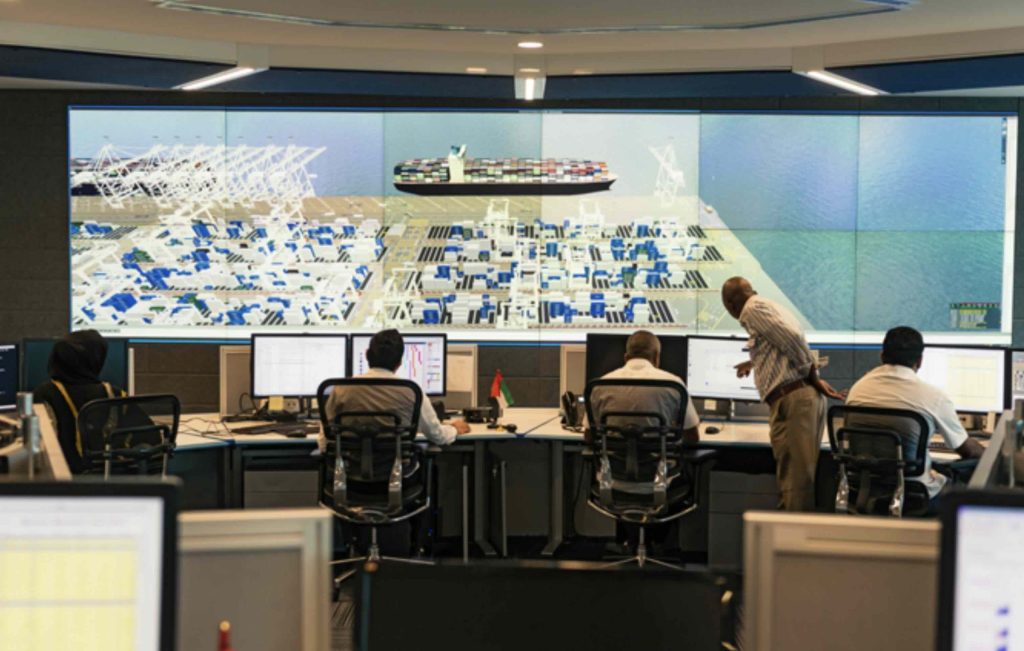
If AI and ML serve as the brain of the modern logistics ecosystem, digital twins act as its eyes and ears. A digital twin is a real-time digital replica of a physical asset, process, or entire supply chain. By synchronizing data from IoT sensors, transportation management systems, and enterprise software, digital twins make complex operations visible and actionable.
“Digital twins allow us to see around corners,” Winter says. “Instead of reacting to disruptions after they happen, we can simulate scenarios and plan accordingly. You can experiment virtually before executing in reality.”
This capability is invaluable in a world where disruptions are not the exception but the norm. For instance, a digital twin of a global distribution network can simulate the impact of a port closure, labor strike, or sudden demand surge. Planners can then evaluate mitigation strategies rerouting shipments, reallocating inventory, or engaging alternative carriers without disrupting real-world operations.
In practice, digital twins are enhancing collaboration among stakeholders as well. Shared, synchronized views of the supply chain build transparency and trust between suppliers, carriers, and customers. Winter emphasizes, “Visibility isn’t just about data access it’s about shared understanding and coordinated action across the supply chain.”
Predictive Response: From Reactive to Proactive
One of the most transformative outcomes of these technologies is the shift from reactive logistics to predictive response. Logistics systems can now anticipate problems and opportunities before they occur. By combining AI-derived insights with digital twin simulations, organizations can forecast disruptions and trigger preemptive actions.
“Predictive response turns uncertainty into advantage,” Winter observes. “When you can foresee delays or demand fluctuations before they materialize, you can pivot rather than patch.”
For example, if a feeder vessel is delayed due to severe weather, AI can assess how that delay will cascade through the supply chain, flagging at-risk customer orders and suggesting remedial actions such as expediting alternative routes or adjusting inventory buffers. This level of responsiveness was unthinkable in legacy systems, which often surfaced problems only after they had already impacted performance.
Network orchestration tools bring all of this together. These platforms serve as command centers, coordinating carriers, warehouses, inventory, and fulfillment channels. With real-time insights and predictive alerts, orchestration engines can sequence activities, adjust priorities, and allocate resources dynamically ensuring that supply chain performance remains aligned with strategic goals.
“Orchestration is not about control; it is about coherence,” Winter explains. “It ensures that every part of the network is informed, aligned, and capable of acting in concert.”
Real-World Impact: Smarter, Faster, More Resilient
Across industries, early adopters of technology-driven logistics are realizing tangible outcomes. Retailers are achieving higher service levels with leaner inventories. Manufacturers are minimizing waste while maximizing throughput. Third-party logistics providers are delivering faster transit times with greater reliability.
In automotive supply chains long characterized by tightly coupled, just-in-time processes AI and digital twins are enabling suppliers and OEMs to synchronize complex multi-tier networks. “What used to require weeks of manual coordination now updates in real time,” Winter points out. “The entire network becomes adaptive rather than awkwardly reactive.”
Smart warehouses powered by robotics and AI are another standout example. These facilities can operate around the clock, dynamically routing materials, managing labor, and optimizing space utilization without human intervention. Winter says, “Automation is not just about speed it is about resilience. Smart systems keep moving even when human resources are constrained.”
Looking Forward: Integration, Sustainability, and Human Potential
While these innovations are already reshaping logistics, the journey is far from complete. Emerging technologies such as edge computing, autonomous vehicles, and blockchain promise to add new dimensions of speed, trust, and decentralization.
Winter offers a forward-looking perspective: “The next frontier is not just smarter technology it is seamless integration. AI, digital twins, blockchain, and connectivity will converge to create networks that are predictive, transparent, and self-healing.”
Sustainability is also becoming central to logistics strategy. AI can now optimize routing not only for cost and speed, but also for carbon emissions. Winter notes, “A resilient supply chain is also a sustainable one. Technologies that reduce waste and emissions are no longer optional they’re strategic imperatives.”
Despite the centrality of technology, Winter stresses that human ingenuity remains indispensable: “Technology amplifies human capability it does not replace it. The future of logistics belongs to people who combine domain expertise with tech fluency.”
Indeed, the logistics workforce of tomorrow will be less focused on repetitive tasks and more on strategic analysis, collaboration, and innovation. As routine decisions are automated, professionals are freed to tackle complex problems, design resilient networks, and cultivate relationships across global ecosystems.
Conclusion
The adoption of AI, machine learning, and digital twins is more than a technological upgrade it is a redefinition of how global logistics operates. These technologies empower organizations to move beyond reactive, siloed processes toward networks that are intelligent, predictive, and adaptive. As global demands continue to evolve, so too must the systems that support them.
“The logistics transformation we’re experiencing is not just technological it is philosophical,” Kim Winter concludes. “We are shifting from managing supply chains to orchestrating living networks. And that is the future of global commerce.”
About the author

Kim Winter
Founder & Group Managing Director · Logistics Executive Group