
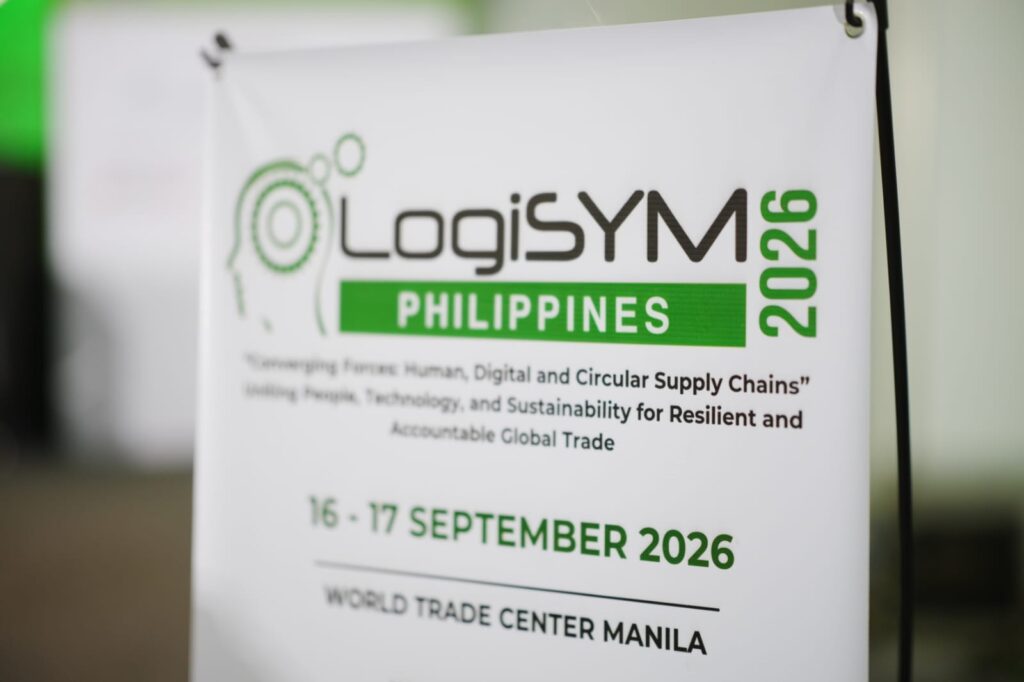
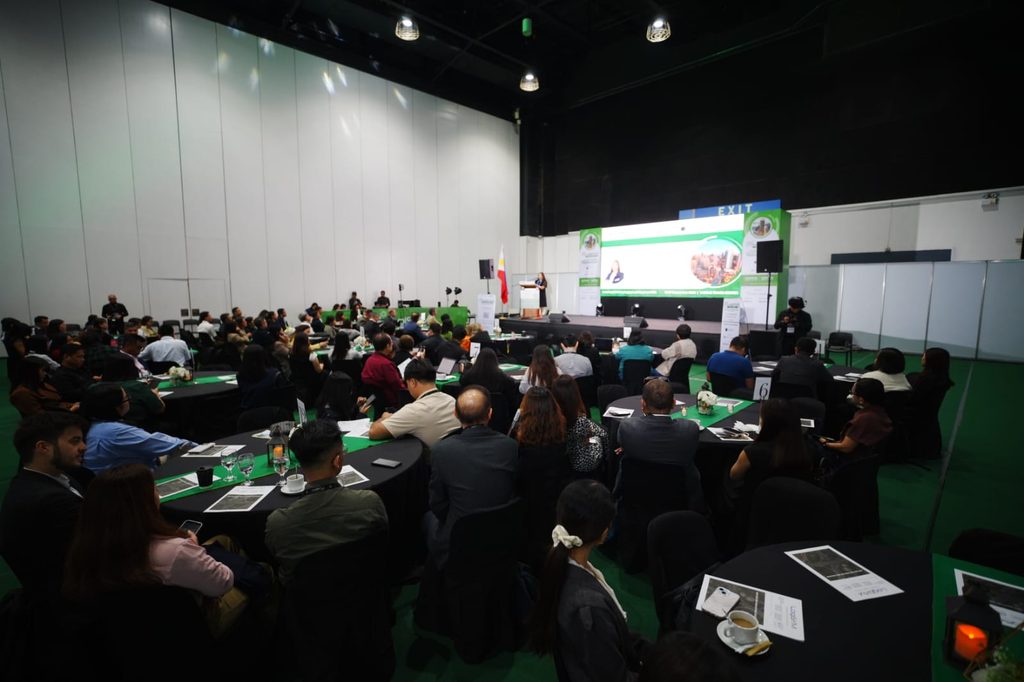
At LogiSYM Philippines 2026 in the World Trade Center Metro Manila, 16–17 September 2026, the debate was not about whether logistics needs more technology. It was about what technology, policy and management must do in practice: keep factories supplied, move cargo without avoidable delay, give people usable information and provide credible alternatives when a route or supplier fails.
Vivian Sulit Santos of the Philippine Economic Zone Authority (PEZA), Vicente Gregorio “Gregg” S. Sebastian of the Philippine Multimodal and Logistics Association Inc., and Jemabel D. Boncajes of Mitsubishi Motors Philippines each came at the issue from a different starting point. Santos spoke for the investment and industrial-policy agenda; Sebastian for the operating realities of freight and fulfilment; Boncajes for a manufacturer dealing with supply risk. Their conclusions were closely aligned. Philippine supply chains need better links between parties, clearer ownership of outcomes and plans that work when normal conditions break down.
Industrial policy needs operational follow-through
Santos argued that supply-chain performance belongs on the national economic agenda. PEZA’s task is not limited to administering industrial estates. Its 436 economic zones and roughly 4,400 located enterprises form part of the country’s production and export base. PEZA reported 387 registered businesses, ₱11 billion in investment and 7,200 direct jobs as of December 2025.
Her focus was on how those zones function as part of a wider production system. That means closer working links between located enterprises, local suppliers, ports, utilities, training institutions and government agencies. The policy aim is to raise local participation in export manufacturing under the Tatak Pinoy programme, rather than leave domestic firms at the edge of foreign-investment supply chains.
PEZA is also pushing its one-portal system and paperless, cashless transactions. The point is straightforward. A shipment can be delayed even when the truck, warehouse and vessel are available if a clearance, payment or document is trapped in a separate process. Faster approvals and better visibility will not solve every bottleneck, but they can remove friction that businesses otherwise carry in lead times and inventory.
Santos paired that agenda with workforce development. PEZA plans to launch an AI Tech Academy and continues training initiatives with DOST-MIRDC, TESDA and universities. The practical test will be whether companies can find people who understand both the systems being introduced and the work those systems are meant to improve.
Freight is only part of the job
Sebastian gave the operating definition of the shift. “The future of logistics must solve the problem of logistics,” he said. That was less a slogan than a warning against technology projects with no bearing on cargo flow.
He drew a distinction between freight and fulfilment. Freight is the movement of cargo. Fulfilment means completing the customer requirement, even when that requires customs coordination, tracking, warehousing, inventory information, distribution and final delivery. A logistics provider does not need to own every asset to take that responsibility. It does need to know where its own capability ends, where a partner takes over and who is answerable when the whole chain does not work.
Sebastian’s example was the empty-container return. A trucker who leaves without knowing whether the depot can accept the box risks a wasted trip. That failure then becomes queueing, yard pressure, driver time, fuel burn and added cost. The issue is not glamorous, but it is typical of the small breaks that damage logistics performance every day.
His recommendation was to join up information already held by terminals, depots, trucking companies and other parties. A useful system would tell a trucker before departure whether a return can be accepted and whether there is capacity. Artificial intelligence has a place, he said, when it helps foresee such problems rather than produce an explanation after they occur.
He also urged the industry to stop treating meetings as an outcome. Select a problem, run a time-bound pilot and measure the result. For empty returns, that could include waiting time, failed attempts, unnecessary truck movements and the time taken to return equipment. If the numbers do not improve, change the approach.
Resilience has a price, and so does fragility
Boncajes put those operating questions into the context of geopolitical risk. Manufacturers once built networks mainly around cost, scale and efficiency. That approach has been tested by the pandemic, semiconductor shortages, war, trade-policy changes and transport disruption. The question now is whether a company can continue making and delivering products when one part of the network is unavailable.
Her answer was not to abandon China. It remains an important manufacturing centre. The change is to avoid relying on one country, one port, one supplier or one upstream source. China+1, friend-shoring, near-shoring and multi-factory arrangements are ways of spreading exposure across locations.
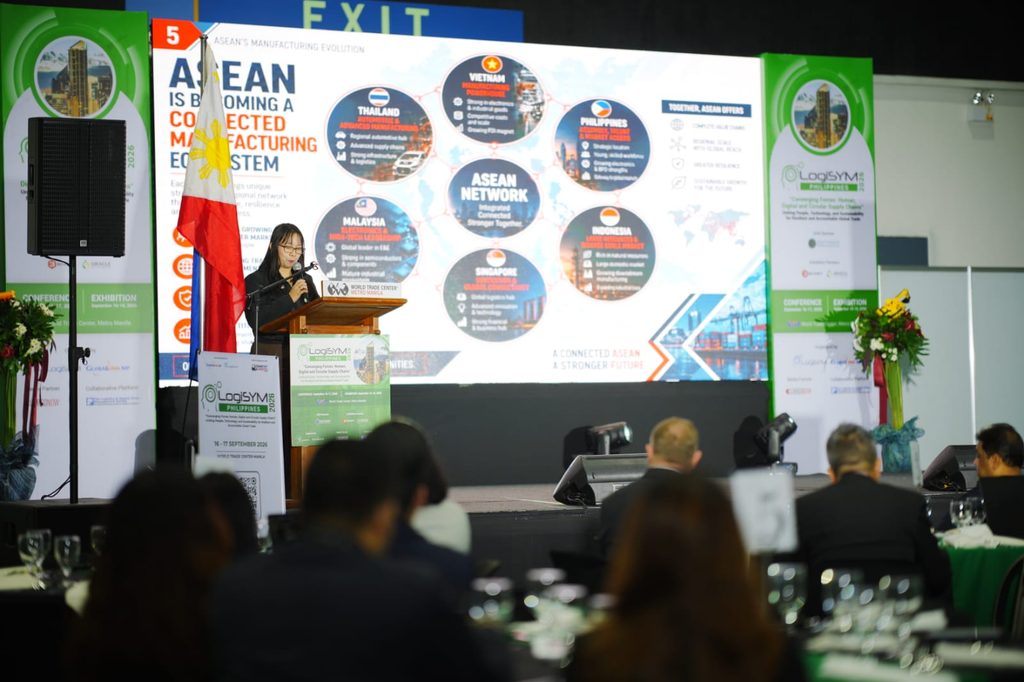
She described ASEAN as a production network with different strengths: electronics in Malaysia, automotive capability in Thailand, manufacturing growth in Vietnam, and assembly and talent in the Philippines. That view carries a challenge for the Philippines. It must make itself easy to use within regional production networks, with dependable gateways, suppliers, skills and transport links.
Boncajes was particularly clear on supplier mapping. Four Tier 1 suppliers may appear to provide diversity, but they do not if they all depend on the same Tier 2 or Tier 3 source. Companies need to find those hidden dependencies before a disruption exposes them.
The response is not simply to hold more stock. It is to build options: alternative suppliers, ports and routes; product designs that can be changed or transferred; and stock held against specific risks. Business-continuity plans must also be tested against credible scenarios. Boncajes used the possibility of a Batangas port closure to illustrate the point. A company should already know its alternative gateway, transport plan and production response.
A common agenda
The three presentations described different parts of the same job. PEZA is working on the public infrastructure of investment, permits, industrial zones and skills. Logistics providers must manage the hand-offs between assets, systems and companies. Manufacturers must design sourcing and production networks that can absorb disruption.
The common requirement is discipline. Better data must reach the people who can act on it. Partnerships must have clear responsibilities. Digital projects must be judged against a real operating problem. And resilience plans must identify the precise point at which a supplier, route or port can fail.
For the Philippines, the opportunity lies in making those basics dependable. That is what will matter to manufacturers deciding where to add capacity, to shippers deciding which gateways to use and to logistics firms trying to move from carrying freight to managing the result.