
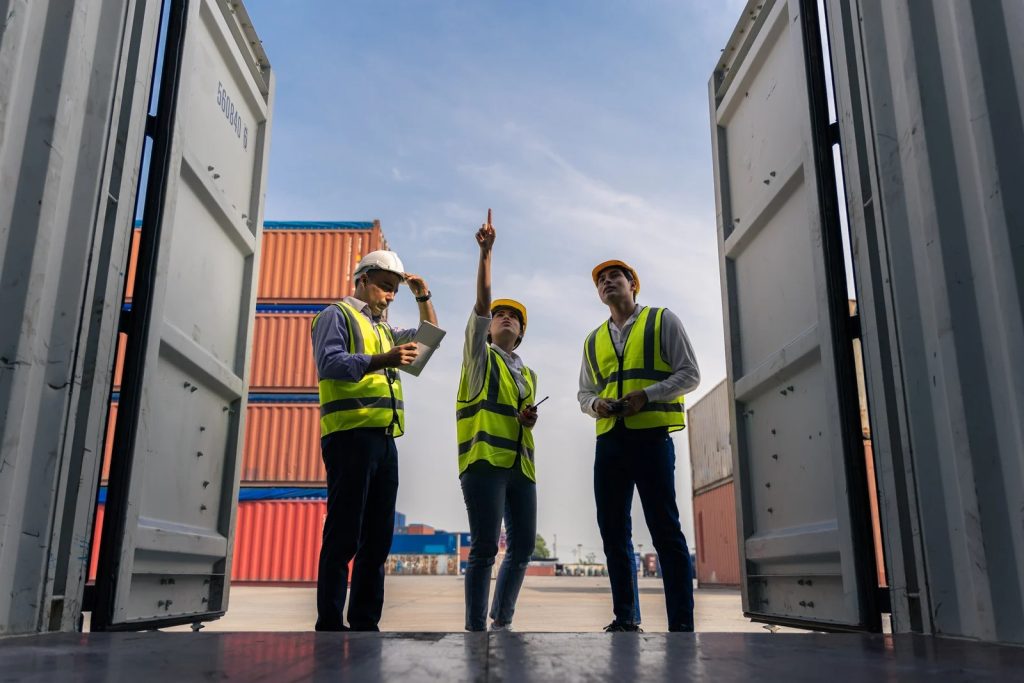
6am. The BIS 50% rule lands like a bomb. Eighty-five shippers’ phones erupt simultaneously. WhatsApp groups scroll too fast to read. Conference calls stack up. U.S. legal counsel, procurement chiefs, logistics directors, all online within the hour. Questions hammer in: Which SKUs hit? Can we reroute? What’s the compliance exposure? Barry, a senior logistics Director in Singapore, watches his supply chain strategy unravel in real time.
This is the new normal. Trump’s reciprocal tariffs don’t just increase costs. They weaponize trade, turning reliable partners into negotiating chips and stable supply chains into daily crises. What Washington frames as leverage translates across the Pacific as container chaos, margin erosion, and survival-level decisions.
The playbook that worked for 80 years just expired.
The challenge to rule-based economics and globalization
A fundamental shift is undermining the rule-based trading system that underpinned globalization for decades. In 2025, the United States unleashed unprecedented “reciprocal” tariffs, raising duties as high as 100% in some cases, blatantly violating core WTO principles. Trade policy has become shockingly transactional: President Trump claimed “in many cases, the friend is worse than the foe in terms of trade,” justifying tariffs even on close partners like Canada and Mexico. Such rhetoric signals a dangerous turn toward mercantilism, eroding multilateral norms that once kept global trade stable.
Apple Inc.’s experience, reported in CNBC, starkly illustrates this new reality. Despite years of proactive “China+1” diversification, the tech giant found itself trapped when 2025 tariffs struck all its production bases simultaneously: 54% on China, 46% on Vietnam, and 26% on India. The company has accelerated production shifts such as 15-20% of iPhone manufacturing in India by year-end and committing $500 billion to U.S. facilities, but yet still faces an estimated $900 million in tariff costs for Q2 2025 alone. Even when companies hedge their bets across multiple geographies, tariffs can target them all.
This fracturing of globalization means no single company, regardless of size or foresight, can navigate tariff turbulence alone. Members thoughts are ‘WTO’s silence on MFN erosion is deafening’. ASEAN’s traditional stance of non-alignment offers limited protection in a world of ad-hoc tariff broadsides. Asian economies must accept that trade can be weaponized overnight, and collective action is no longer optional, it’s essential for survival.
Tariffs are here to stay
Far from being a short-term negotiating ploy, tariffs have become a permanent fixture of global commerce. Singapore’s Prime Minister Lawrence Wong declared that “the era of rules-based globalisation and free trade is over,” marking what he called “a profound turning point” in global affairs. “For nearly 80 years since the end of World War Two (Pax Americana), America was the anchor for the free market economies of the world. It championed free trade and open markets, and led efforts to build a multi-lateral trading system.” Now, Wong warned, “we are entering a new phase – one that is more arbitrary, protectionist and dangerous.”
A high-tech company announced plans to move 90% of USA-bound product manufacturing outside China by October 2025, selecting Thailand as its primary alternative hub. This multi-year transition where relocating 50%+ of PC production over 2-3 years requires significant capital investment and accepting reduced cash conversion as inventory buffers costs. They are stockpiling hardware to protect against fluctuations, deliberately choosing resilience over short-term efficiency. This isn’t hedging; its wholesale restructuring based on the conviction that tariffs are structural, not cyclical.
The financial stakes are enormous. Japan’s Toyota estimates U.S. tariffs will cost nearly $10 billion in fiscal 2026. The EU is hiking steel safeguard tariffs to 50%, explicitly aligning with protectionist U.S. policy. Governments rely on tariff leverage. Few want to eliminate tariffs; they are now key strategic levers.
Asian cargo owners must focus on disruption-ready, resilient supply chains over mere efficiency. Thriving organizations will embed tariff resilience and collective intelligence via Shippers Council platforms.
Mitigation challenges: systems that fail agility
Many companies lack the agility needed for unpredictable tariff shifts. Traditional supply chains value efficiency over rapid response. A recent survey found 77% of manufacturing and supply chain leaders worry about effectively managing resources amid tariff disruptions, while 93% believe trade wars will escalate through 2025. Over 90% have incorporated geopolitical risk into planning.
Even savvy firms encounter diminishing returns on solo mitigation efforts. Apple eliminated “low-hanging fruit” of tariff exposure, only to find the next layers harder to prune. Cisco relocated manufacturing and sourced parts outside China, yet its CFO admitted *some* products still faced tariffs despite those efforts. From India’s Wipro flagging squeezed IT margins to Hong Kong’s Johnson Electric issuing profit warnings as component costs spiked, numerous Asian exporters struggle to pivot quickly.
True supply chain agility means rapid reconfiguration or falling behind policy shocks. Collaboration across networks, not just internal change, is essential for agility. Shippers Councils provide the platform for members to share what’s working, what’s not, and how to collectively pressure for better customs procedures, FTA utilization, and trade facilitation measures that amplify individual mitigation efforts.
Supply chain influencers must lead
Amid this turmoil, managing tariff risk has become a core strategic function. In leading companies, “One positive is that supply chain now has a seat at the boardroom table,” notes one industry CEO, observing growing recognition that end-to-end visibility and resilience must be driven from the top.
Schneider Electric exemplifies this leadership-driven transformation. The company fundamentally shifted its philosophy from “just-in-time” to “just-in-case,” deploying AI and automation across supply chain operations to enable rapid reconfiguration. Supply chain leaders elevated to strategic decision-making roles drove this change, leveraging data-driven insights for predictive planning. They cut CO₂ by 75% and earned top SCM recognition. Schneider Electric shows resilience and efficiency can go hand-in-hand.
Be champions of proactive strategy includes advocating for diversification even in good times, running tariff scenario war games, and pushing for technology investments that map cost impacts. Forward-looking firms embed trade compliance and customs experts within cross-functional teams so that tariff impact assessment becomes as routine as cost or quality checks. For instance, companies form tariff SWAT teams that routinely scan bills of materials for opportunities to “tariff-engineer” by altering component materials to shift into lower tariff brackets or sourcing from FTA partner countries.
For Shippers Council members, this leadership role takes on added dimension: convening power. Your collective voice carries weight that individual companies lack. When Shippers Council members unite to advocate for specific customs improvements, preferential FTA access, or regional supply chain infrastructure, governments in Asia listen. When you share intelligence on emerging tariff threats or successful mitigation tactics, every member benefits. Leaders must be strategists and ambassadors; Councils multiply your impact.
Call to action: unite for agility in perpetual disruption
The message for Asia’s supply chain and trade strategy community is urgent: Collective action is overdue. Tariff disruptions aren’t a one-off storm; they’re the new climate where no company can do this alone.
This is where Shippers Council membership becomes not just valuable but essential. Consider what collective action enables:
Embed tariff resilience through shared intelligence. Treat tariffs as a daily management variable. Design supply chains for pivoting fast. Leverage FTAs like RCEP and CPTPP. But don’t do this in isolation. Sharing real-time efficacy of FTAs, bottlenecks, and sourcing accelerates learning for all. The goal: if tomorrow a 25% tariff hits your top export market, your team can within days execute a plan because you’re leveraging collective intelligence, not starting from scratch.
Close regional gaps through collaborative innovation. ASEAN’s centrality gives the region access to multiple major markets, but political neutrality isn’t a shield. The recent surge in Southeast Asia’s exports was often built on re-routing Chinese inputs to avoid tariffs may not be sustainable. Companies need to invest in genuinely localizing component and material production. But here’s where collaboration matters: Imagine a pan-ASEAN Shippers Council forum that rapidly disseminates best practices on using Singapore’s FTZ facilities, Indonesia’s bonded zones, or Vietnam’s emerging component suppliers. Individual companies struggle to map these options; collective intelligence makes them accessible. Shippers Councils can coordinate supplier qualification initiatives, share due diligence on tariff-friendly sources, and even negotiate collectively for better logistics infrastructure.
Build capability through community. Western firms are ahead: over two-thirds are actively onshoring or near-shoring production to mitigate tariffs. Many use advanced scenario-planning software. Asian companies risk falling behind. But acquiring these capabilities is expensive and time-consuming for individual firms. Councils enable shared capability-building: joint workshops, tool procurement, and trade expertise. The Council accelerates everyone’s capability.
The competitive advantage of collective agility
Tariff volatility demands collaborative reinvention. Asian supply chain leaders have navigated intense disruptions before and proven their mettle. Now, they must apply that resolve to trade policy volatility but not in isolation.
The challenge to the old globalization order is real, but it’s also an opportunity: those who act decisively to embed tariff resilience through collective action will gain competitive edge. The world’s supply chains are being rewired, and Asia stands at a crossroads. Will its businesses be mere spectators, or proactive shapers of their destiny?
The answer depends on what we do together, today. Asian supply chain influencers must lead from the front and they must lead together. Join your peers in the Shippers Council. Share your challenges and solutions. Build the intelligence network and collaborative capabilities that enable rapid response to perpetual disruption.
Survival goes to the most connected, not the biggest player. Your membership in the Shippers Council isn’t just about networking; it’s about survival and competitive advantage in an age where agility through community is the path forward.
Collaborative leaders will drive resilient futures for their organizations and the region.
As Chairman of the Shippers Council, I invite any like-minded organisation to be part of this essential community. Together, we can transform perpetual disruption into sustained competitive advantage for Asian cargo owners. The question isn’t whether tariff turbulence will continue, but it’s whether you’ll face it alone or with the collective strength of your peers.
About the author

Kendrick Ng
Chairman · The Shippers Council · Logistics and Supply Chain Management Society