
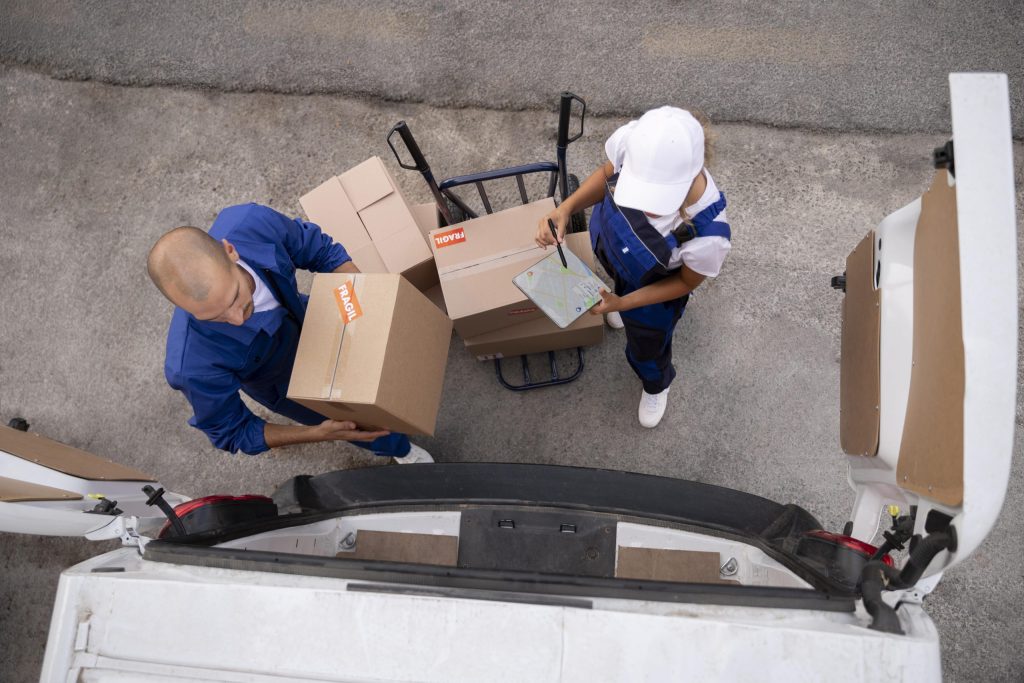
Imagine a future in Asia Pacific (APAC) where the return journey of goods is as streamlined as their forward delivery. In this APAC region, every discarded device, every mountain of used packages, and every unwanted item is either profitably reused or responsibly recycled. That is an ambitious target, but we can get close. There is always a bit of entropy. Our vision lies at the heart of a circular economy, driven by both innovation and collaborative action. Here, reverse logistics is not a cost center, but a core differentiator: it delivers bottom-line value, trust, and the green credentials that today’s society and regulators increasingly demand.
This future is not a utopian dream. It is poised to become a reality as the APAC’s reverse logistics market advances, driven by the region’s leadership in e-commerce and manufacturing. Consultancy analyses and market studies now identify the APAC region as the most significant¹, accounting for slightly over 50% of the global reverse logistics market and the fastest-growing worldwide. Key actors worldwide² are offering services ranging from recall returns to business-to-business (B2B) returns, commercial returns, repairable returns, end-of-use returns, and end-of-life returns, contributing to developments in the region. The stakes go far beyond operational efficiency; mastering reverse flows will separate those prepared for global regulation, consumer scrutiny, and resource scarcity from those who ignore the opportunity.
The Current Landscape: Growth, Innovation, and Harsh Realities
Asia Pacific’s rise toward becoming a reverse logistics powerhouse is remarkable. China and India, with their vast e-commerce bases and industrial output, lead the charge. Their economies thrive on both massive consumer demand and high volumes of returned or end-of-life goods, such as smartphones, home appliances, and apparel. Online retail alone is predicted to surpass US$2 trillion in the region by 2026, with China holding the largest share globally, and India’s e-commerce market is expected to reach $120 billion by that year, further driving the demand for return and recycling mechanisms.
What’s powering this acceleration? First, the region’s digital boom. Internet and smartphone penetration have turned “returns” from an afterthought into a business-critical process for every major retailer and logistics provider. Next, a rising sustainability imperative: governments and consumers now prioritize closed-loop solutions, making green practices in recovery, repair, resale, and recycling non-negotiable. Innovations in digital traceability and AI-powered computer vision, supported by IoT, blockchain, automation, and AI sorting, are being rapidly deployed to maximize transparency, sorting accuracy and automation, and speed in return flows. China’s Circular Economy Promotion Law, India’s E-Waste (Management) Rules, and Right to Repair are driving China’s return rates, mirroring Western trends and an explosion of secondary markets.
And yet, Asia Pacific’s reverse logistics sector is at a crossroads. Resource constraints, regulatory inconsistencies, and geopolitical tensions all have a profound impact. The region lacks standardized processes and frameworks that enable favourable economics for reverse logistics. Cross-border returns risk delays amid evolving trade disputes, diverse customs rules, and variable infrastructure, even as customer expectations for rapid, no-hassle returns remain sky-high.
While nations like Singapore, China, and Japan are spearheading the move towards sustainability, many others struggle with basic waste management or integrating technology on a large scale. The environmental promise is real, but circular economy ideals still face practical challenges.
The Gap: Fragmentation, Inefficiency, and Regulatory Fragmentation
What is holding back the next wave of progress in reverse logistics? First: fragmentation. Processes and compliance regimes differ not just between countries, but often between adjacent provinces or competing companies. There is no universal system for tracking, certifying, or incentivizing the return, refurbishment, or recycling of goods. Consumer, enforcement and governmental agency dynamics add to the challenge.
Inconsistencies in regulations and collection standards lead to wasted time and resources. Collaboration is undermined by distrust over data, technology, and cost-sharing. Smaller enterprises and less affluent economies are regularly left behind, unable to access or afford cutting-edge solutions.
Infrastructure, too, is uneven. While leading countries invest in automated return hubs and advanced warehousing, others still rely on manual, labor-intensive workflows. The result? Delays, increased handling costs, and, most concerning, waste that ends up in landfills, burning value, and violating sustainability commitments.
Importantly, at the heart of APAC’s reverse logistics challenges lies a fundamental economic misalignment. Without region-wide pooling of commodity categories (e.g., electronics, batteries), volumes per stream remain too low to justify the fixed costs of sorting, processing, and transport. Collection networks lack density, and, critically, few end users pay dedicated fees for material returns. When recycled-commodity prices fall below the cost of recovery (where the cost to prepare feedstock for recycling adds another layer of challenge), operational expenses consistently outstrip revenues, discouraging private investment and infrastructure build-out.
The gap is fundamentally one of vision and collective action. In its absence, the environmental and economic promise of reverse logistics remains only partially realized. The region cannot afford inefficiency or complexity if it expects to lead in tomorrow’s global economy.
The Alliance Opportunity: Towards Integration and Shared Prosperity
The answer lies in a robust Reverse Logistics Alliance, purpose-built for the APAC region’s diversity and ambition. Imagine a consortium that brings together policymakers, industry leaders, logistics providers, technology platforms, and regulators. With a shared mandate, it would work to:
- Standardize protocols for accepting, processing, and certifying returns, recycling, and resale, while taking into consideration local/national regulations and policies.
- Identify opportunities to pool commodity categories across borders to aggregate sufficient volumes for economic sorting and recovery.
- Build interoperable data and tracking platforms, leveraging distributed ledger technology, IoT, and AI for supply chain visibility from the consumer back to materials recovery, across every border in the region and beyond.
- Harmonize environmental and compliance standards, making it easier for companies to operate efficiently and meet the growing list of regulatory requirements.
- Share best practices and resources. Larger players could support infrastructure development in smaller economies, ensuring that no market is left behind.
- Foster public-private partnerships to finance and promote sustainable return centers, digital platforms, and community engagement campaigns. Green and sustainable finance can be a strong incentive for return/reverse systems and to drive green growth.
Such an alliance would not only address gaps in processes, technology, and compliance but also create opportunities to extract value from waste, support the region’s ascent as a global leader in sustainable supply chains, and deliver social and environmental benefits. With governments, businesses, and civil organisations under one roof, the APAC region could banish fragmentation and set the benchmark for the world’s circular economy ambitions. Reverse logistics and circular economy at scale and across the region need innovation. Hence, the most straightforward name for the alliance is ARLIA (APAC Reverse Logistics Innovation Alliance).
Reverse Logistics as the Heartbeat of Asia’s Growth Story
As the world’s old supply chains strain and sustainability imperatives sharpen, reverse logistics in the Asia Pacific stands at a moment of rare promise. It is not simply a niche practice for discarded goods or broken appliances; it is on track to become the new engine of value preservation, resilience, and climate responsibility. The remarkable growth in market value and scale is proof: what once lurked at the back door of supply chains now commands the front stage of boardrooms, policy summits, and community debates.
The grand twist? Successful reverse logistics is the new symbol of leadership in a low-carbon future. When waste becomes a resource, when returns enrich rather than diminish the bottom line, Asia Pacific’s collaborative embrace of reverse logistics will not only lift business fortunes. It may decide the region’s standing in the global story of progress, partnership, and renewal.
Sources
¹Reverse Logistics Market Size and Forecast 2025 to 2034, Precedence Research, 2025
²Asia Pacific Reverse Logistics Market Size & Outlook, Grand View Research, 2025
About the authors

Spencer Liu
Strategic Advisor and Venture Builder in Climate Tech · Riverwood Climate Solutions

Wolfgang Lehmacher
Global Supply Chain Advisor & Former Director · World Economic Forum