
By: Oana Jinga, Co-Founder & Chief Commercial & Product Officer at Dexory
The relationship between businesses and their third-party logistics providers (3PLs) is changing. Moving and storing goods efficiently remains essential, but it is no longer the only measure of a successful partnership. Customers also need accurate information, faster responses to problems and greater confidence in the decisions they make across their supply chains.
For 3PLs, this creates an opportunity to take on a more strategic role. Rather than simply delivering services against agreed targets, they can help customers anticipate challenges, improve performance and plan for growth.
Achieving this requires more than new technology. It depends on closer collaboration between logistics providers, their customers and technology partners, supported by reliable information about what is actually happening inside the warehouse.
From service providers to strategic partners
Traditionally, logistics outsourcing has been built around clearly defined responsibilities. A provider receives, stores, picks and dispatches goods, while the customer monitors performance against agreed service levels. This model remains important, but it does not always provide the flexibility needed when demand changes, inventory problems emerge or operations come under pressure.
A more strategic relationship involves both parties working together to identify risks, improve processes and plan for future requirements. Rather than simply reporting whether orders were fulfilled on time, the 3PL can help explain what affects performance and where improvements are possible.
NTT DATA’s 2026 Third-Party Logistics Study found that 81% of shippers identified supply chain disruptions and complexity as a driver of strategic partnerships, while 76% cited opportunities to reduce costs through collaboration. Among 3PLs, 61% identified demand for end-to-end visibility as a key driver.
These findings reflect a wider change in expectations. Businesses want logistics partners who can help them understand their operations, not simply manage them. That requires shared objectives, regular communication and a common view of performance.
For 3PLs, the challenge is turning the large volumes of information generated in warehouses into something useful. Data needs to be accurate, accessible and timely enough to support decisions about inventory, capacity, fulfilment and future growth.
Why warehouse visibility matters
One of the biggest challenges in achieving this is knowing what is happening inside the warehouse.
Most modern warehouses rely on warehouse management systems (WMS) to record inventory movements, stock locations and order activity. These systems are essential, but the accuracy of their information depends on physical processes being carried out and recorded correctly.
Goods can be placed in the wrong location, movements can go unrecorded and discrepancies can emerge between system records and the physical inventory. Even relatively small errors can have wider consequences. In a shared-user warehouse, where a 3PL manages inventory for several customers, these problems can also affect labour planning and the use of available space.
Traditional cycle counting helps identify discrepancies, but manual checks require time and can interrupt other warehouse activities. Where checks are carried out periodically, errors may remain undetected between counts.
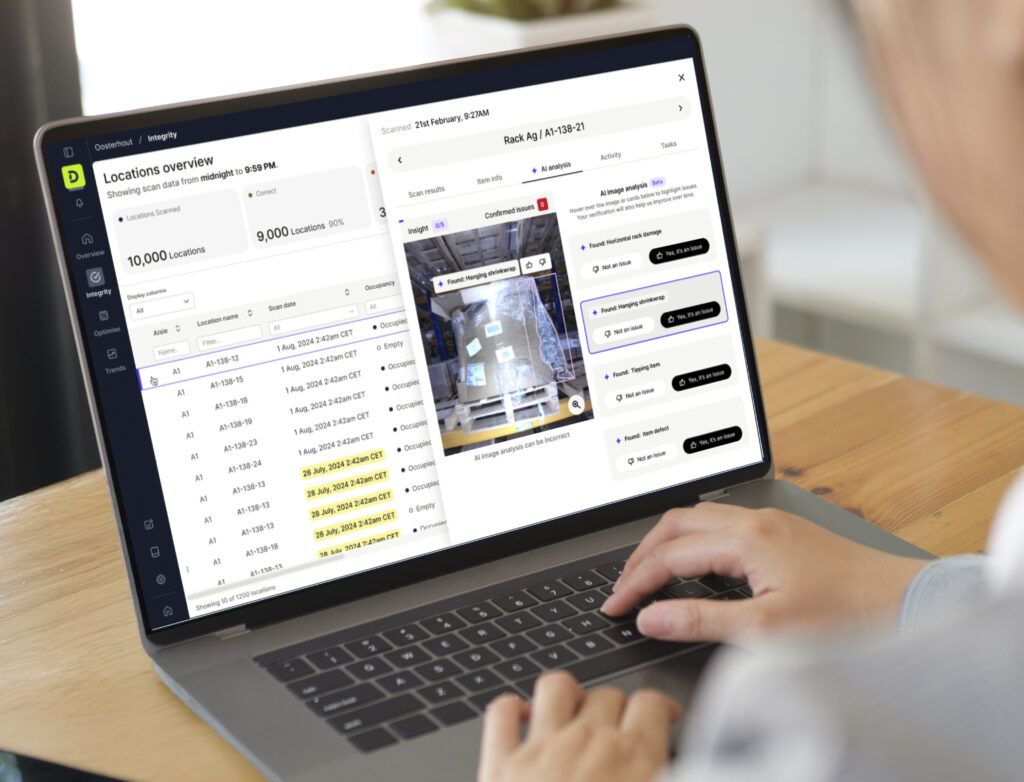
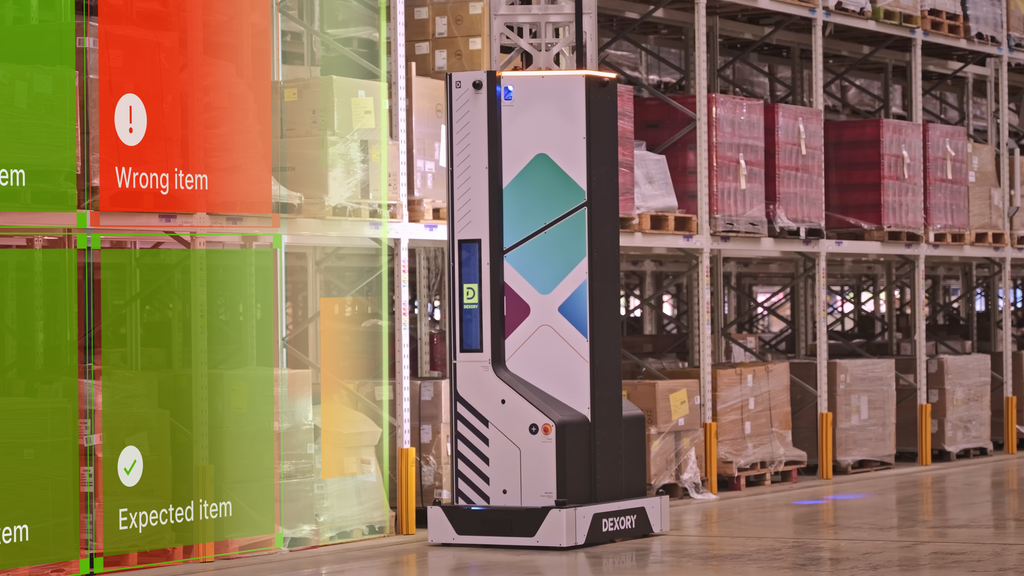
More frequent, automated inventory checks offer a different approach. Autonomous scanning systems can capture information about stock locations and warehouse conditions, allowing operators to compare physical observations with WMS records and investigate differences.
This does not remove the need for warehouse management systems or human oversight. Instead, it provides an additional source of information that can help teams verify records and identify problems earlier.
For 3PL customers, the potential benefit extends beyond inventory accuracy. More reliable information can support decisions about replenishment, order commitments, stock allocation and future storage requirements.
Visibility therefore becomes more than an internal operational measure. It provides a foundation for better communication between logistics providers and the businesses they serve.
Technology partnerships are part of the solution
Improving warehouse visibility is not simply a question of introducing new equipment. It requires different systems, technologies and organisations to work together.
A warehouse management system records transactions and manages workflows. Robotics can automate repetitive tasks or collect physical information. Analytics tools can help identify patterns, highlight exceptions and support decisions.
Each serves a different purpose. The value comes from combining these capabilities in ways that improve day-to-day operations. This is where partnerships between 3PLs and technology providers become increasingly important.
Rather than replacing existing systems, technology should complement them and address specific operational challenges. For example, automated inventory scanning can provide a more frequent view of physical stock, while integration with the WMS allows teams to compare findings against expected locations.
The resulting information can help operators prioritise investigations, identify recurring errors and understand where processes may need to change. However, successful integration requires more than technical compatibility. Partners must agree on data ownership, access, security, responsibilities and how information will be used.
A logistics provider may need detailed operational information to manage its warehouse, while a customer may need a clear view of stock availability and service performance. Both should be able to work from consistent information without unnecessary complexity.
For 3PLs, the priority should therefore be practical: establish reliable data, connect the systems that need to communicate and make the results useful to the people managing operations.
Turning better information into measurable results
The benefits of stronger technology partnerships are best understood through their effect on warehouse performance.
A practical example comes from a US-based third-party logistics provider specialising in fulfilment and inventory management for growing omnichannel brands. Following its deployment of Dexory’s platform, the company reported a 14% improvement in pallet location accuracy and a tenfold increase in inventory counting speed compared with a previously tested drone-based approach. It also reported saving 16 hours of labour per day.
More frequent inventory audits helped the provider identify discrepancies earlier and reduce the time spent on manual checks. This allowed warehouse teams to focus more attention on planning, space optimisation and customer-specific projects.
While these results reflect the experience of one operator, they demonstrate how improved warehouse visibility can deliver benefits beyond inventory accuracy. By reducing time spent on routine checks and resolving discrepancies, 3PLs can free up resources for activities that add greater value to their customers.
For 3PLs considering similar investments, performance should be assessed against clear measures. These might include inventory accuracy, time spent on manual checks, discrepancy resolution, fulfilment reliability and the use of warehouse space.
It is equally important to understand the starting point. A technology investment that delivers substantial improvements in one operation may produce different results elsewhere, depending on warehouse layout, inventory characteristics, existing systems and working practices.
This makes shared objectives and agreed performance measures essential. Technology partnerships are most valuable when their success is judged by operational outcomes rather than the sophistication of the equipment deployed.
Building partnerships around shared intelligence
As 3PLs develop more advanced capabilities, the relationship with their customers can also become more collaborative.
Accurate warehouse information creates opportunities for more informed discussions about performance. Instead of reviewing problems only after they have affected service, logistics providers and customers can examine emerging issues and agree on corrective action.
For example, repeated stock discrepancies may point to weaknesses in receiving or put-away processes. Changes in storage utilisation may indicate a need to review inventory allocation. More reliable stock information may help customers plan promotions or seasonal demand with greater confidence.
These are not decisions that technology can make independently. They require operational knowledge, commercial understanding and cooperation between the organisations involved.
The role of data is to give those discussions a stronger factual basis.
This also changes how the value of a 3PL relationship can be measured. Traditional indicators such as cost per order, picking accuracy and on-time delivery remain essential. But customers may also benefit from faster access to reliable information, earlier identification of risks and a greater ability to plan jointly with their logistics partners.
For providers, these capabilities offer a way to demonstrate value beyond the physical movement of goods.
The next stage of 3PL evolution
The evolution of 3PLs is not about replacing established services with technology. Warehousing, transport and fulfilment will remain at the centre of the industry. What is changing is the level of insight customers expect alongside those services.
As supply chains become more connected, 3PLs have an opportunity to strengthen their position by combining operational expertise with reliable data and effective technology partnerships.
Doing so requires a clear understanding of the problems technology is intended to solve, investment in systems that work together and a commitment to sharing useful information. It also requires recognising that successful partnerships are built over time. Trust depends on consistent performance, transparent communication and a willingness to address problems together.
The 3PLs best placed to meet changing customer expectations will be those that can connect what happens on the warehouse floor with the decisions being made across the wider supply chain. In that environment, the ability to provide accurate, timely and actionable information becomes an important part of the service itself.
And the strongest partnerships will be those that use this shared understanding to make better decisions, improve performance and create lasting value for everyone involved.
About the author

Oana Jinga
CC&PO | Co-Founder · Dexory