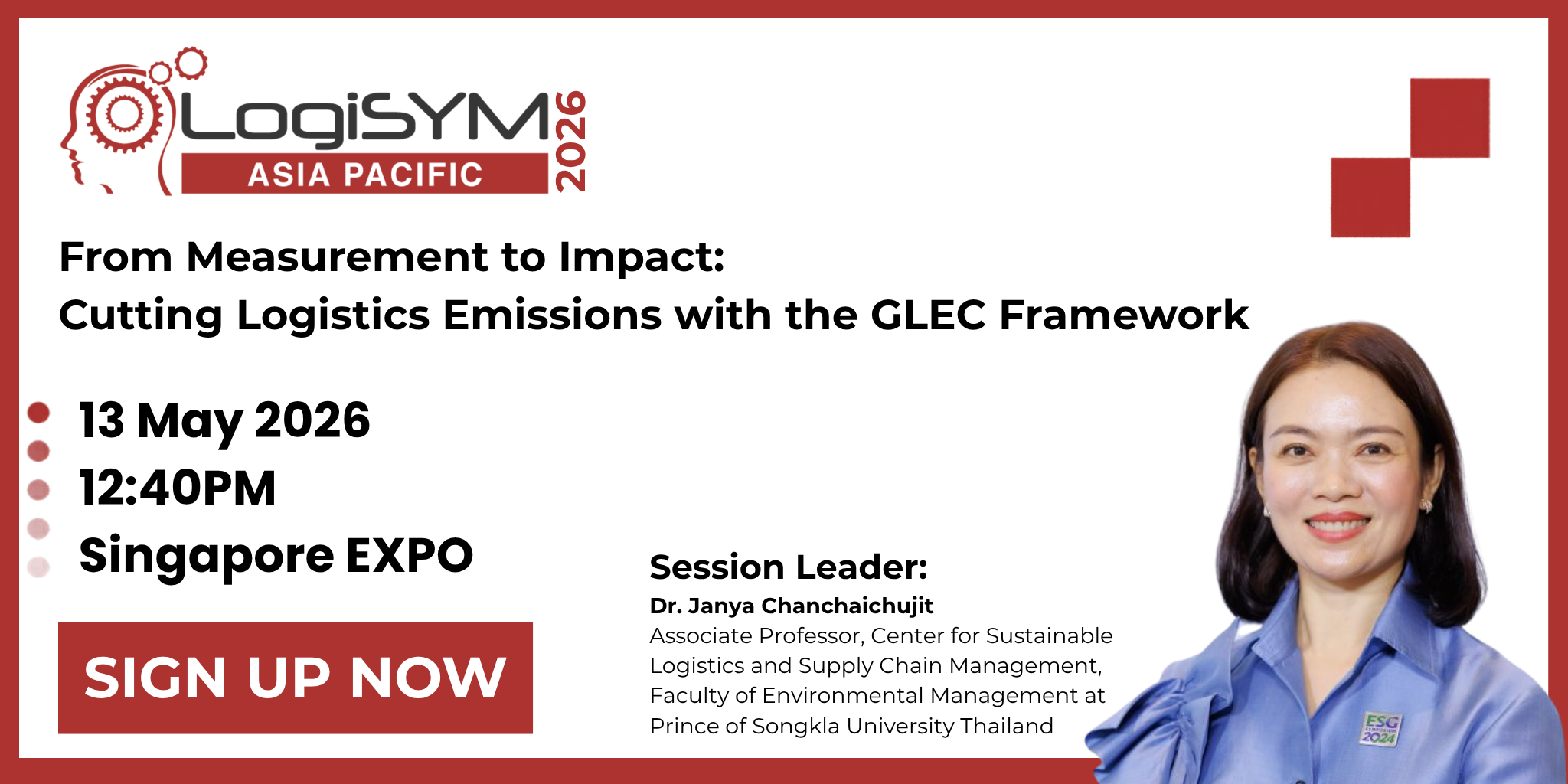
LogiSYM Asia Pacific 2026 – “From Measurement to Impact: Cutting Logistics Emissions with the GLEC Framework”
Synopsis
This 75‑minute masterclass, led by Dr. Janya Chanchaichujit, walks participants through how to use the Global Logistics Emissions Council (GLEC) Framework as a practical engine for emissions reduction, not just reporting. Starting from the basics of activity data and emission factors across road, air, sea, rail, and warehousing, the session shows how to build a consistent, ISO 14083‑aligned logistics carbon inventory and then use it to pinpoint high‑impact reduction levers such as modal shift, network redesign, load factor improvement, and fleet optimization. Through worked examples and interactive exercises, attendees learn how to translate GLEC‑based calculations into supplier engagement, customer communication, and alignment with emerging ESG and disclosure requirements.
Three Key Takeaways
- How the GLEC Framework provides a globally recognised, multimodal, “built on GHG Protocol” method to calculate and report logistics emissions that aligns with ISO 14083 and supports Scope 3, Category 4 and 9 accounting.
- Step‑by‑step understanding of activity data and emission factors—how to use GLEC to identify emissions hotspots by mode, lane, fleet, or customer and turn them into concrete levers such as route optimisation, load consolidation, and modal shift.
- How to embed GLEC results into day‑to‑day decisions and stakeholder narratives, including supplier scorecards, RFP criteria, customer reporting, and ESG disclosures, so logistics decarbonisation becomes a visible source of competitive advantage, not just a compliance exercise.