

The year 2025 set the stage for major transformations in global trade and logistics. While much of the world adjusted to new supply chain realities following years of volatility, 2026 will be defined by a deeper restructuring of trade routes, production networks, and logistics capabilities. Geopolitical realignments—intensified by shifts in the Middle East, the ongoing decoupling between the US and China, and renewed focus on regional self-reliance—will continue to reshape the global logistics map. The new logistics landscape will be characterised by re-regionalisation of supply chains, AI-driven automation, green corridors, and the integration of Islamic finance and halal compliance in global value chains.
Four key logistics and supply chain trends are expected to shape 2026:
- The rise of regional trade corridors and South–South logistics integration.
- The acceleration of AI and digital sovereignty in supply chains.
- The expansion of halal and ethical value chains across OIC economies.
The shift from green logistics to climate-resilient logistics systems.
Rise of Regional Trade Corridors
The global logistics map is being redrawn. As trade tensions, sanctions, and geopolitical rivalries fragment traditional routes, countries in Asia, the Middle East, and Africa are investing heavily in new regional and inter-regional corridors.
The India–Middle East–Europe Corridor (IMEC), China’s Belt and Road 2.0, and ASEAN’s push for intra-Asian connectivity are redefining trade gravity. The Middle East continues to emerge as a central logistics hub—linking Asian production with European consumption—while Southeast Asia consolidates its position as the world’s manufacturing and distribution backbone.
This “re-regionalisation” trend will accelerate in 2026, driving investment in multimodal infrastructure, bonded logistics zones, and industrial clusters that emphasise sustainability and supply security.
Digital Sovereignty and AI-Driven Supply Chains
After several years of digital transformation, 2026 will mark the maturation of AI in logistics operations. Predictive analytics, machine learning, and AI-enabled control towers will be mainstream tools for demand forecasting, route optimisation, and disruption management. Governments are also asserting digital sovereignty—developing national logistics data platforms to ensure that critical supply chain data remains under domestic control. Asia and the Middle East are expected to lead this evolution, as logistics hubs such as Singapore, Dubai, and Kuala Lumpur develop regional standards for digital trade, blockchain verification, and trusted data exchange.
Automation continues to expand beyond warehouses to port operations and last-mile delivery, supported by robotics, autonomous vehicles, and smart infrastructure. The future logistics workforce will increasingly combine digital literacy with strategic thinking—managing technology ecosystems rather than manual operations.
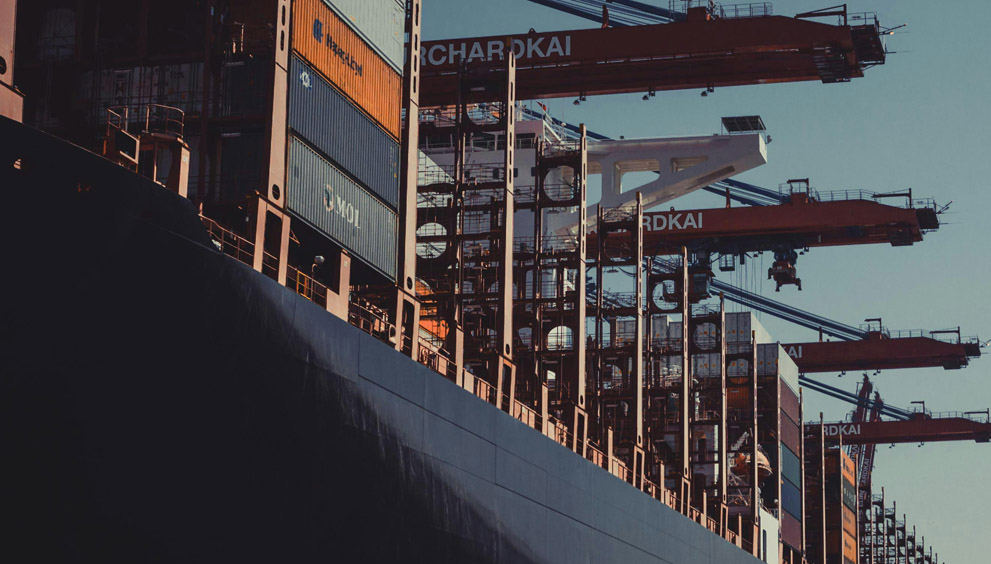
Brand owners are increasingly recognising that halal assurance must extend beyond production to the entire supply and value chain.
At the same time, the convergence of halal, sustainability, and Islamic finance is creating new business models.
Halal industrial parks, based on focused clusters, backed by solid supply chains & technology, addressing sustainability, and supported by Islamic finance waqf-solutions, will strengthen ethical and sustainable trade ecosystems—linking faith-based values with circular economy principles. These new generation of halal industrial parks, also known as Halal Park 2.0, will boost both halal production in OIC countries and as well as increase intra-OIC halal trade.
From Green Logistics to Climate-Resilient Logistics
Environmental sustainability remains high on the global agenda, but the conversation in 2026 will evolve from “green logistics” to climate-resilient logistics. The increase in extreme weather events, from floods to heat waves, has exposed the vulnerability of supply chains. Cities will intensify efforts toward zero-emission urban logistics, supported by electric fleets, hydrogen trucks, and urban consolidation centres. At the same time, logistics planners must invest in infrastructure resilience, adaptive routing, and real-time risk monitoring.
Collaboration among governments, industry, and academia will be key to developing logistics systems that are not only sustainable but also capable of absorbing shocks and ensuring business continuity.
Conclusion
2026 will be a pivotal year for global logistics—shaped by technology, sustainability, and a shifting geopolitical balance. The centre of gravity of global trade continues to move eastward, anchored by Asia and the Middle East as the engines of production, innovation, and logistics excellence.
The logistics industry is evolving from a cost-driven function into a strategic enabler of national competitiveness and resilience. Those investing early in AI, regional connectivity, halal assurance, and climate-resilient operations will define the benchmarks for the decade ahead. As we enter 2026, logistics professionals are no longer simply managing movement—they are designing the networks that sustain economies and connect the world.
About the author
Dr Marco Tieman
CEO & Board Advisor · LBB International / HSC Alliance