
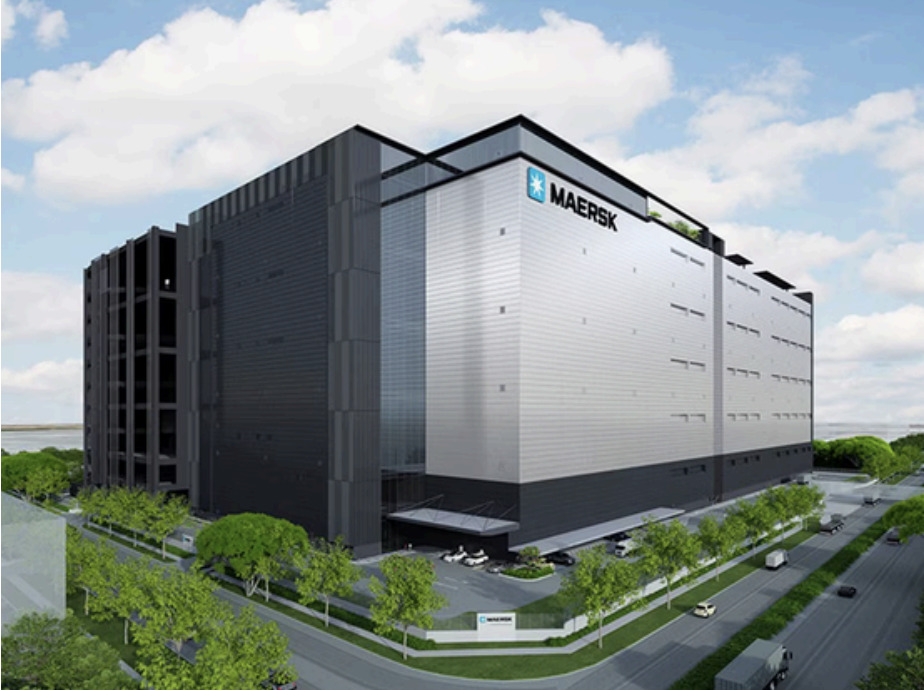
Maersk’s World Gateway II in Singapore is a hard‑edged capacity and capability play, not a branding exercise. The 1.1 million sq ft site, already about 70% occupied, gives Maersk a high‑throughput regional hub that can support genuine omni‑channel flows rather than just more pallet storage.
The core of the design is automation density and how it is orchestrated. Multi‑shuttles, ASRS, ACRs, AMRs, conveyors, sorters, put‑to‑light and RFID are deployed as a single, integrated system to drive order cycle time and picking accuracy while reducing manual touches. Instead of discarding its existing stack, Maersk has kept its Warehouse Management System as the control point, interfacing upstream with customer ERPs and platforms and downstream into warehouse execution/control layers that manage the individual automation subsystems. In practice, the WMS owns inventory, work allocation and service logic; the WES/WCS layers translate that into instructions the shuttles, robots and sorters can execute in real time.
This architecture only works if the WMS has sufficient integration maturity. Maersk is explicit that its WMS integrates “seamlessly” with market‑leading ERPs, platforms, couriers and the automation stack, which implies a reasonably robust, well‑documented API layer rather than a patchwork of bespoke fixes. That matters for operators who have lived with in‑house legacy systems where every change request turns into a one‑off workaround and long‑term technical debt.
Maersk is also deliberately not pinning the site’s identity to a single automation brand. It describes itself as brand‑agnostic, working with multiple systems integrators and technology partners and selecting equipment on fit‑for‑purpose criteria. For shippers, that reduces the risk of being locked into one vendor’s roadmap and gives some confidence that future reconfiguration — new customers, new channels, different handling profiles — can be engineered without tearing out the core.
Taken together, World Gateway II is best read as a pragmatic integration of scale, automation and network position: close to Tuas and within reach of Changi, customs‑bonded, heavily automated and controlled through a WMS‑centred architecture designed to plug into customers’ existing systems rather than force them to adapt to Maersk’s.