
By Joost Rompen – Country Director of Slimstock Singapore
Look around the bustling cities or at the myriads of targeted online ads in the Asia Pacific region, and there is a theme that’s hard to escape: Sustainability. From eco-friendly products to ethically sourced materials, the push towards sustainable practices is evident.
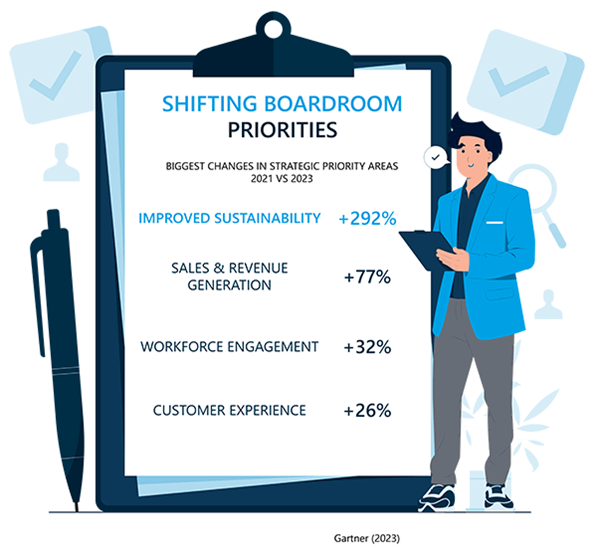
However, sustainability in supply chains is not just consumer driven. A recent survey highlighted that 48% of CEOs see increasing sustainability in the supply chain as a top business priority. Considering the potential risks and costs of unsustainable practices, it’s no surprise that supply chain sustainability is now a key topic in boardrooms across the APAC region. In fact, the supply chain accounts for a staggering 90% of the overall environmental impact, encompassing everything from raw materials to distribution emissions.
As the complexity of supply chains in APAC increases, so does their environmental impact. This makes it imperative for businesses to create supply chains that are sustainable, ethical, and competitive.
A Deeper Analysis of Supply Chain Sustainability
Defining supply chain sustainability begins with asking critical questions: How eco-friendly is your supply chain? Can it be improved? Are there better ways to source raw materials, manufacture, distribute, and dispose of products, or even eliminate waste entirely?
Sustainability in supply chains encompasses more than just environmental impact; it also includes social and economic considerations. A truly sustainable supply chain addresses all three aspects—environmental, social, and economic—to ensure a holistic approach that benefits both the business and society.
Understanding Your Environmental Impact
To improve your environmental impact, you must first understand where you stand. Start by assessing the carbon footprint of your supply chain. This includes evaluating greenhouse gas emissions, waste generation, resource consumption, and energy inefficiencies. By identifying these areas, you can pinpoint where improvements are needed, often revealing surprising insights about your operations. Once you have this understanding, you can take targeted actions to reduce your environmental footprint and enhance sustainability across your supply chain.
Ensuring Ethical Practices in Your Supply Chain
Are the workers within your supply chain employed fairly and ethically? It’s crucial to examine whether your practices and those of your suppliers align with ethical standards. This involves assessing your sourcing strategies—choosing ethically sourced raw materials, prioritizing fair trade, and avoiding conflict minerals. Equally important is providing safe working conditions, fair wages, and upholding human rights. By promoting diversity, equality, and inclusion, you foster social responsibility that positively impacts both local communities and global networks.
Balancing Social and Economic Responsibility
Neglecting social responsibility can alienate the very people you depend on to buy or use your products. Similarly, overlooking economic responsibility can jeopardize your company’s long-term success. As a cornerstone of supply chain sustainability, economic responsibility involves managing financial commitments to stakeholders—customers, suppliers, and partners—through fair negotiations and reliable delivery on promises. Beyond this, it’s about surpassing expectations in social responsibility and environmental impact, all while ensuring your business remains profitable and sustainable.
Achieving a Leaner Supply Chain That Is Fit for A Purpose
Opportunities to streamline your supply chain are abundant, and the benefits are clear. However, there’s no quick fix for achieving sustainability—it requires effort and investment. While initial costs may seem daunting, focusing on small, incremental improvements can yield significant results over time. For instance, optimizing packaging and smarter ordering could reduce shipments and boost efficiency. A series of small gains, such as a 1% increase in efficiency, can accumulate into substantial improvements. With the global consumer base expanding rapidly, now is the time to view sustainability as a strategic opportunity, shifting from cost-cutting to profit-maximizing initiatives.
Many businesses have successfully embraced supply chain sustainability.
However, it’s not just large-scale initiatives that matter. Small changes can have a significant impact. Imagine reducing your inventory by just 10%. While it may seem minor, if every business did the same, the collective environmental benefit could be substantial—potentially preventing further environmental harm.
Achieving Inventory Reduction and Environmental Benefits
How can you reduce inventory by 10% without affecting sales? Even the leanest operations often have excess that can be trimmed through better stocking policies, improved forecast accuracy, and optimized service levels. This goal is achievable with effective supply chain decision-making and the right business partners.
A 10% inventory reduction doesn’t just boost efficiency—it also benefits the environment by cutting CO2 emissions, reducing energy consumption, and minimizing waste. On average, 8% of all inventories end up as waste, contributing to $163 billion lost annually. By better managing your supply chain, you can significantly lower emissions, reduce warehouse space, and decrease shipping, all while saving stock from landfills.
Sustainability isn’t just eco-friendly; it’s a smart business move. With 30% of consumers preferring brands with strong ethical values, and 28% avoiding companies with ethical concerns, aligning your brand with sustainability can offer a significant competitive edge.
Harnessing S&OP for a Greener Supply Chain
Achieving supply chain sustainability requires a unified approach where every part of the process works in harmony. Sales and Operations Planning (S&OP) provides the essential framework for this integration. By aligning sales forecasts with production capacities and inventory management, S&OP not only enhances efficiency but also supports the implementation of sustainable practices throughout your organization. With S&OP, you can create a foundation for reducing waste, optimizing resource use, and promoting environmental responsibility. Explore how S&OP can be a catalyst for advancing sustainability in your supply chain.
- Integrated Planning for a Sustainable Future
- As supply chain expert Tony Wild aptly put it, “Inventory is the physical consequence of missing data.” In the realm of sustainability, this translates to significant waste sent to landfills and emissions from incineration. Despite the abundance of data many businesses possess, the challenge lies in effectively gathering, integrating, and analyzing this information to make informed decisions.
- Sales and Operations Planning (S&OP) facilitates this by fostering cross-functional collaboration and providing a structured framework for capturing and utilizing supply chain insights. More crucially, S&OP aligns teams with a unified vision, resulting in more accurate baseline forecasts. This collaborative approach ensures that future demand predictions are validated through consensus, enabling businesses to better synchronize supply with demand and significantly reduce excess inventory, contributing to a more sustainable supply chain.
- Fostering Collaboration and Enhancing Risk Management for Sustainability
- Sustainable progress cannot be achieved by maintaining the status quo or by isolated departmental efforts. For meaningful and lasting improvements, a unified approach across the entire organization is essential. In essence, to drive sustainability, innovation must be a collective endeavor.
- A robust Sales and Operations Planning (S&OP) process promotes collaboration and information sharing, empowering the organization to challenge conventional practices, exchange ideas, and adopt best practices. When these sustainability initiatives are aligned with profit maximization and employee satisfaction, they become integral to overall company success and are celebrated as significant achievements.
- Integrating sustainability risks, such as resource scarcity, into your S&OP process can significantly bolster your company’s resilience. This may involve diversifying suppliers, exploring alternative market routes, or working with different materials. The more informed and proactive you are, the better equipped you’ll be to navigate potential challenges. Ignoring these risks in favor of a “hope for the best” strategy has proven to be a perilous approach in the past.
Embracing Continuous Improvement for Sustainability
No matter how effective your operations are today, there’s always room for enhancement tomorrow. This principle of continuous improvement is central to the principles of Sales and Operations Planning (S&OP). By integrating your sustainability objectives into the S&OP process, you can systematically monitor and measure progress, ensuring ongoing refinement and growth.
Aligning your sustainability goals with integrated planning, collaboration, risk management, and a commitment to continuous improvement maximises the likelihood of realising significant benefits. These improvements may manifest as increased efficiency, enhanced customer satisfaction, a stronger brand reputation, or even leadership in sustainable practices. With a focus on continual advancement, the potential for success—green and sustainable—becomes virtually limitless.
About the author

Joost Rompen
Country Director · Slimstock Singapore