

By Albert Tan, PhD,
Asian Institute of Management
By Digzi Umali,
President of Pacific Concord Container Lines, Inc. (PACCORD))
Redefining Supply Chain Leadership for a New Era
The disruptions of the COVID-19 pandemic revealed the strategic centrality of supply chains—and the rising complexity of leading them. Logistics executives were forced to make decisions in real time, navigate uncertain markets, and maintain service continuity under immense pressure.
More importantly, they had to lead people through ambiguity, fear, and fatigue. It became clear that resilience is not just built into systems and networks—it is cultivated within teams and cultures.
As a result, supply chain leadership is being redefined. No longer about top-down control or purely operational oversight, it now demands:
– Agility to navigate change,
– Empathy to support people,
– Strategic vision to drive long-term impact.
This shift reframes leadership not as a function but as a collective capability distributed across every level of the organisation.
Culture as the Catalyst for Sustainable Performance
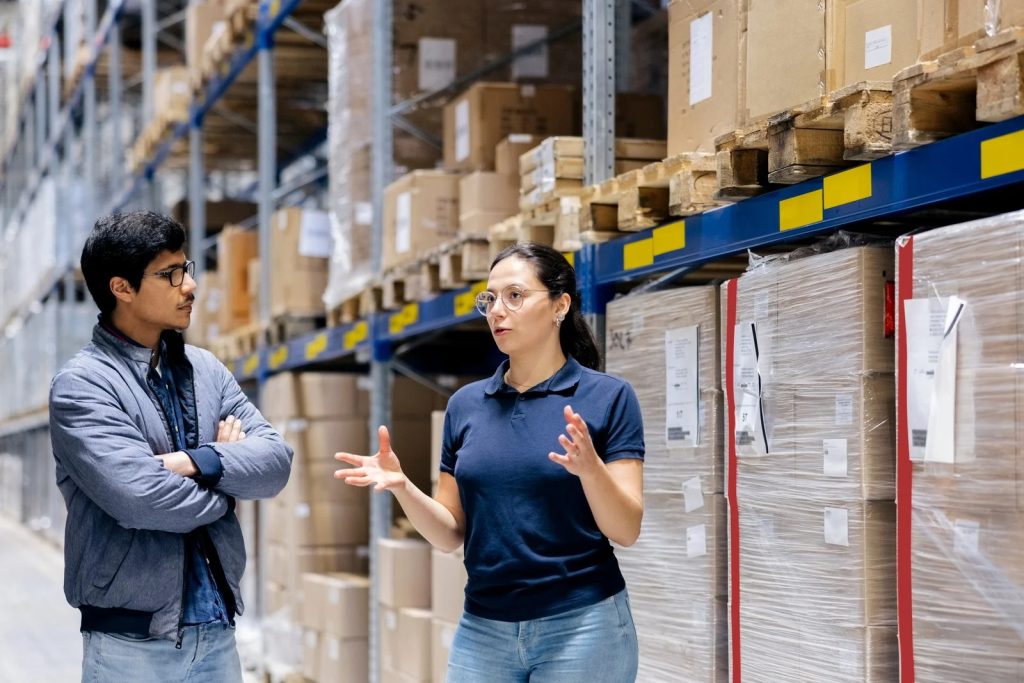
While technologies and tools enable efficiency, it is culture that determines whether organisations can sustain performance and adapt to disruption. Culture drives how people collaborate, make decisions, and respond to challenges.
A compelling example comes from a logistics company that underwent a leadership transition at the onset of the pandemic. Instead of focusing solely on protecting service levels, the new president emphasised employee well-being, transparent communication, and emotional stability. This culture-first approach helped the company remain resilient—and even emerge stronger.
The lesson is clear: strategy alone is not enough. As Belias and Koustelios noted,
“An organisation with the best strategy in the world but a culture that will not allow it to make that strategy happen is already doomed from the beginning.”
What Individuals Must Do: Lead from Where You Are
Leadership is no longer the exclusive domain of executives. In today’s supply chain environment, every individual—from warehouse coordinators to planners to transport managers—has a leadership role
to play.
• To strengthen leadership at an individual level, supply chain professionals should:
• Practice emotional intelligence to build trust and psychological safety.
• Adopt a growth mindset, treating every challenge as a learning opportunity.
• Act as culture carriers, modelling values in day-to-day decisions.
• Lead through influence, not authority—supporting collaboration and accountability across functions.
Leadership is now defined not by position, but by purposeful behaviour.
What Organisations
Must Do: Embed
Leadership in Culture
• To develop leadership at scale, organisations must move beyond performance metrics and actively invest in leadership as a cultural capability.
• This means: Developing leadership at every level
• Aligning strategy with values Rewarding cultural leadership
• Modelling adaptive leadership styles
• This is where the BCG Leadership Archetypes become invaluable.The BCG Leadership
Archetypes: A Playbook for Modern Supply Chain Leaders
The Boston Consulting Group identifies four leadership archetypes that are especially relevant in dynamic, high-pressure supply chain environments. The most effective leaders shift fluidly between these roles:
The Architect – Designs resilient systems and scalable structures. In logistics, architects build adaptive frameworks to manage volatility and future-proof operations.
The Driver – Executes with urgency, clarity, and precision. Essential in crises or scale-ups, drivers rally teams, set priorities, and push through resistance.
The Humanist – Leads with empathy and inclusion. As workplace expectations evolve, humanists create cultures where people feel heard, valued, and supported.
The Coach – Develops others through guidance and empowerment. In complex environments, coaches help teams grow, share ownership, and build continuity regardless of leadership changes.
By rotating across these archetypes, leaders can tailor their approach to meet the moment—whether stabilising operations, transforming culture, or mentoring future leaders.
From Crisis Management to Strategic Growth
The past five years have tested every dimension of supply chain leadership. First came the urgency of crisis response. Then the demands of recovery. Now, the opportunity—and responsibility—is to lead strategic, people-powered growth.
Organisations that thrive in the future won’t just have faster systems. They’ll have stronger cultures, broader leadership, and more human-centred ways of working.
Conclusion: Culture Is Leadership in Action
Supply chain leadership today means more than just solving problems—it means building systems and cultures that solve problems even when you’re not in the room.
To meet the demands of this new era: Individuals must act with empathy, courage, and purpose.
Organisations must embed leadership development into the DNA of their operations.
And both must recognise that the most enduring advantage in supply chains is not technology, but people—empowered by culture and enabled by trust.
To lead in supply chains is to:
• Build adaptable structures,
• Inspire with empathy,
• Coach for growth, and
• Drive purposeful results.
In execution, leadership is about outcomes.
In essence, it is about vision, values, and culture—the true engines of performance.
Singapore University of Social Sciences
About the authors

Albert Tan
Associate Professor & Academic Program Director · Asian Institute of Management

Digzi Umali
President · Pacific Concord Container Lines, Inc.